
A Division of the Hoskin Group, Canada's Instrumentation Leader


Force Transducer, Load Cells, and Load Cell Force Sensors from Durham Instruments, designed to measure tensile and compression forces are ideal for use in both laboratory and industrial environments. Our Force Transducer, load cells, and Load Cell Force Sensors utilize proprietary temperature-compensated strain gauges with high output. We have the solution to improve your application!
Check out the variety of Force Transducers, Load Cells, and Load Cell Force Sensors we have available. If you have a question or would like to order one of our products feel free to contact our Force Transducer Load Cell experts! The Force Transducer, Load Cells, and Load Cell Sensors Durham Instruments offers are the most popular solutions for your unique application. Need assistance in selecting the right Force Transducer, Load Cell, and Load Cell Sensors? Get in touch with our specialists and we’ll discuss your unique application to recommend the right solution!
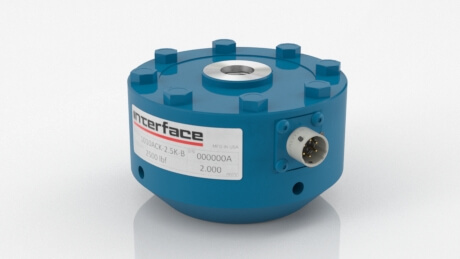
1000 Fatigue Rated Low Profile Load Cell
Model 1000 series is a fatigue-rated load cell with 300% safe overload, extremely low moment sensitivity of 0.1%/in and a higher fatigue life. With many variants and configurations our fatigue-rated load cells provide up to 100 million fully...
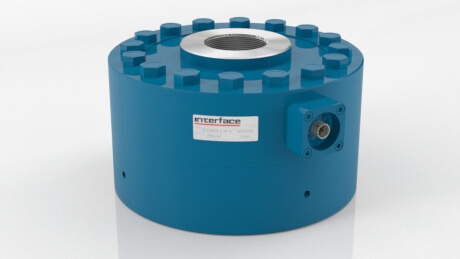
1000 High Capacity Fatigue Rated Low Profile Load Cell
Model 1000 is a fatigue rated load cell with 300% overload protection, extremely low moment sensitivity of 0.1%/in and a higher fatigue life than competitive stainless steel load cells. If you need to measure 1lb (4.45N) or 1 million pounds of force...
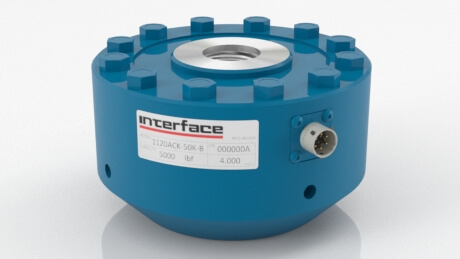
1100 Ultra Precision Load Cell
The 1100 is selected from the best load cells and has very low nonlinearity, hysteresis, eccentric load sensitivity, and temperature sensitivity. The gauge sensors in every load cell are individually inspected and tested, and certified to meet our...
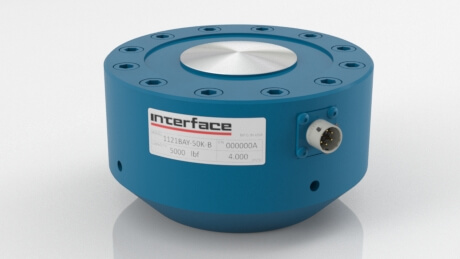
1101 Ultra Precision Compression-Only Load Cell
The 1100 is selected from the best load cells and has very low nonlinearity, hysteresis, eccentric load sensitivity, and temperature sensitivity. The gauge sensors in every load cell are individually inspected and tested, and certified to meet our...
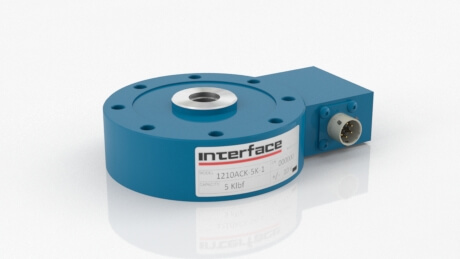
1200 and 1201 Series 3-Wire Amplified Load Cell
Internally amplified version of the 1200 and 1201 series standard precision low profile load...
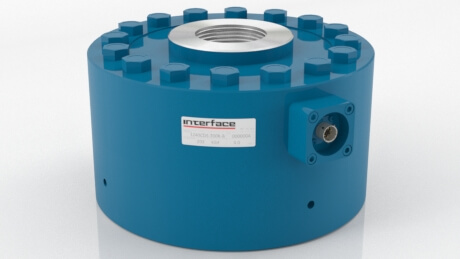
1200 High Capacity Standard Precision Low Profile Load Cell
The 1200 has higher output than most competitive load cells and is designed for general purpose applications requiring a load cell compensated for eccentric loads. If you need to measure 1lb or 1million pounds of force, Interface Inc. load cells can...
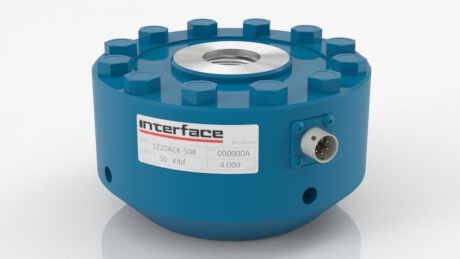
1200 Standard Precision Low Profile Load Cell
The 1200 Low Profile is Interface's most popular load cell and is designed for static applications. The 1200 has higher output than most competitive load cells and is designed for general purpose applications requiring a load cell compensated for...
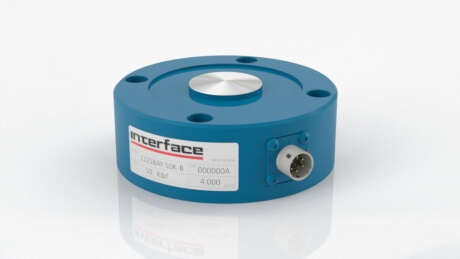
1201 Compression Standard Precision Low Profile Load Cell
The 1201 LowProfile is Interface’s most popular load cell designed for static applications. The 1201 has higher output than most competitive load cells and is designed for compression-only applications requiring a load cell compensated for...
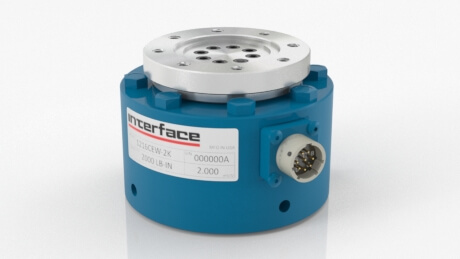
1216 Axial Torsion Load Cell
Model 1216 Axial-Torsion load cell measure both force and torsion in the same cell – with either channel capable of being used independently. Available in capacities from 250 lbf. to 2K...
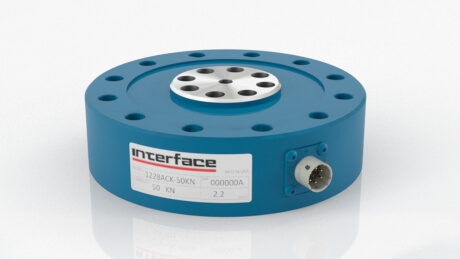
12×8 Flange Standard Precision Low Profile Load Cell
1200 Flange Load Cell-This is similar to 1200 but instead of having a center thread it has multiple smaller threads making installation easier for certain types of cylinders. The gauge sensors in every load cell are individually inspected and...
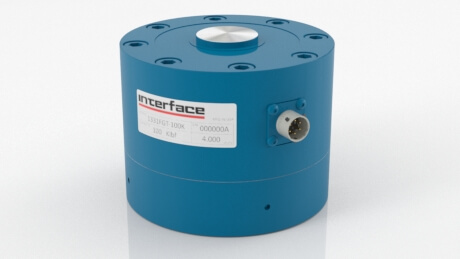
1331 Compression Low Profile Load Cell
Model 1331 Compression Only Low Profile Load Cell has a compact design with performance of +/-0.07% or better. This product has a high output of 4mV/V and is eccentric load compensated to ensure the highest accuracy during measurements. Model 1331...
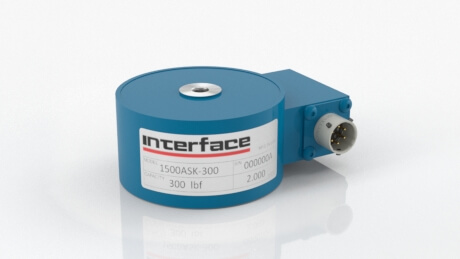
1500 Low Capacity Low Profile Load Cell
The 1500 is a fatigued rated Low profile load cell is designed for low capacity applications where low sensitivity to eccentric load is...
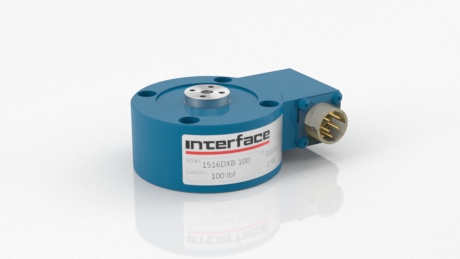
1516 Axial Torsion Load Cell
Model 1516 is a LowProfile™ load cell designed for applications where axial and torsion loads need to be measured simultaneously. Available in capacity 100 lbf./50...
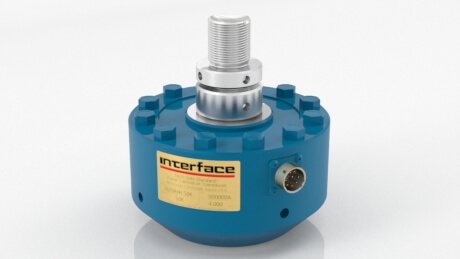
1600 Gold Standard™ Calibration Load Cell
The 1600 Gold Standard load cell is designed for calibrating other load cells where the best possible load cell is required. It has a 4% lower load limit per ASTM E74 and is a step above the 1100. The 1600 provides both tension and compression in...
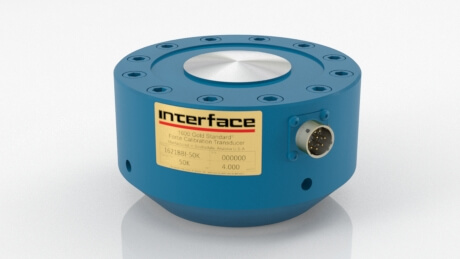
1601 Gold Standard™ Calibration Compression-Only Load Cell
The 1601 Gold Standard load cell is designed for calibrating other load cells where the best possible load cell is required. It has a 4% lower load limit per ASTM E74 and is a step above the 1100. The 1601 provides...
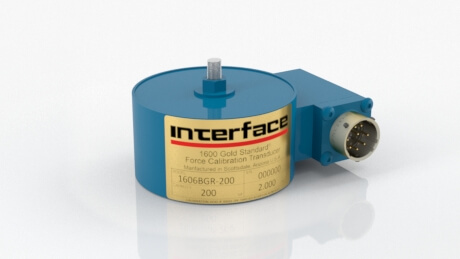
1606 Gold Standard™ Low Capacity Calibration Load Cell
The 1606 Gold Standard load cell is designed for calibrating other load cells where the best possible load cell is required. It has a 4% lower load limit per ASTM E74 and is a step above the 1100. The 1606 is especially made for low capacity...
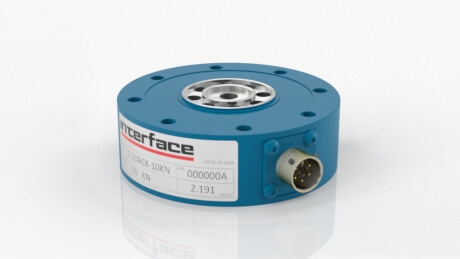
1700 Flange Low Profile Load Cell
The 1700 Flange Load Cell has multiple smaller threads making installation easier for certain types of cylinders. The gauge sensors in every load cell are individually inspected and tested, and certified to meet our rigid...
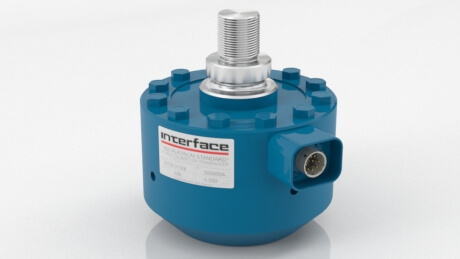
1800 Platinum Standard™ Calibration Load Cell
Model 1800 Platinum Standard® load cell is the ultimate in calibration grade load cells which is capable of a 2% lower limit per ASTM E74 and features an integral...
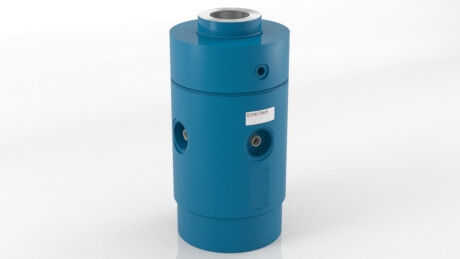
2000 High Precision Canister Load Cell
Model 2000 High Precision Canister Load Cell features low hysteresis of +/-0.03% or less while offering rugged construction for use in harsh environments. This product has a ring-type design that is preferred for use in heavy duty force testing....
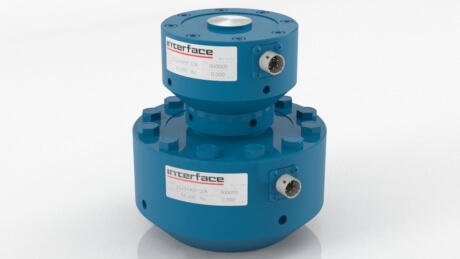
2101 Dual Range Standard Compression-Only Load Cell
The 2101 consist of lower and higher capacity model 1200 type load cells which are stacked with overload protection built into the lower capacity load cell permitting high resolution to be obtained at both low and high levels of...
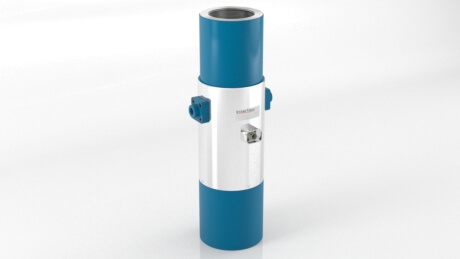
2160 High Capacity Column Load Cell
The 2160 is a column load cell typically used in higher force applications. Available in capacities from 300K lbf. to 1000K...
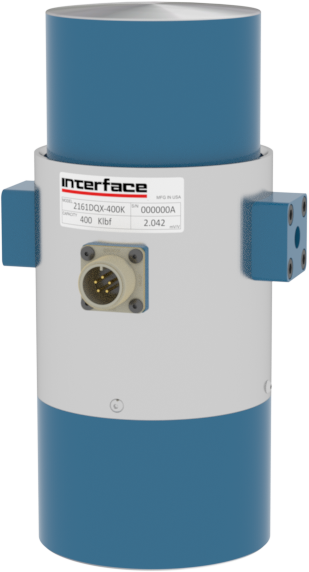
2161 High Capacity Column Load Cell – Compression Only
Model 2161 is a column compression only load cell typically used in higher force...
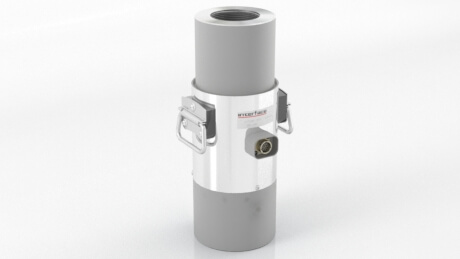
2200 Calibration Column Load Cell
Model 2200 is a Calibration Grade Column Load Cell that is lightweight and portable for use in the field. This product is also excellent for performing calibrations in the lab as well. Capacities from 100K lbf to 200K lbf are...
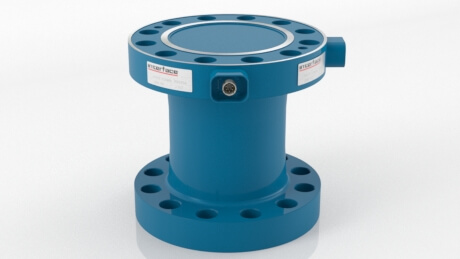
2300 High Capacity Flange Mount Column Load Cell
Model 2300 is a column design that has a flange mount for easy installation. Capacities from 142K lbf to 450K lbf are...
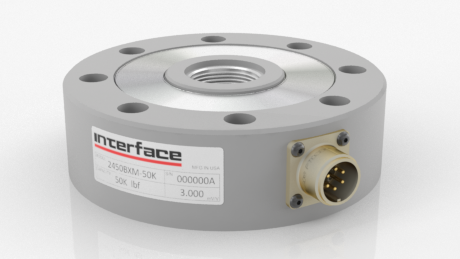
2400 Standard Stainless Steel High Capacity Load Cell
The 2400 is a stainless steel load cell designed for applications requiring a hermetic seal for use in general industrial applications. Capacities from 7.5K lbf to 300K lbf are...
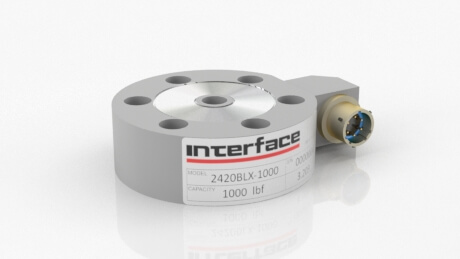
2400 Standard Stainless Steel Low Capacity Load Cell
The 2400 is a stainless steel load cell designed for applications requiring a hermetic seal for use in general industrial applications. Capacities from 100 lbf to 5K lbf are...
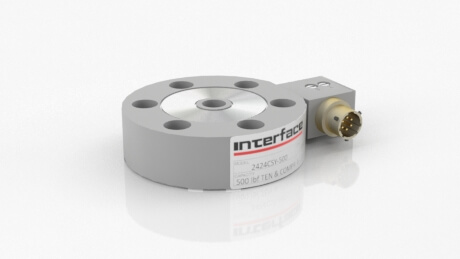
2404 Standard Stainless Steel 2-Wire Amplified Load Cell
The 2404 is an amplified version of 2400 which gives mA output. It is still a stainless steel load cell designed for applications requiring a hermetic seal for use in general industrial applications. Capacities from 100 lbf to 5K lbf are...
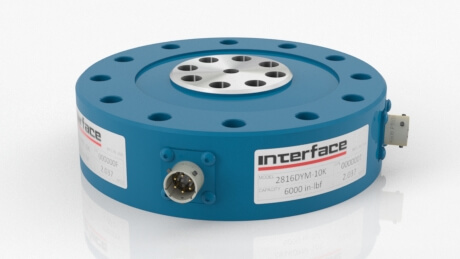
2816 Axial Torsion Load Cell
The 2816 Axial-Torsion load cell measure both force and torsion in the same load cell. Either channel is capable of being used independently. This product is similar to Model 1216, but with a lower profile and capable of much higher forces and...
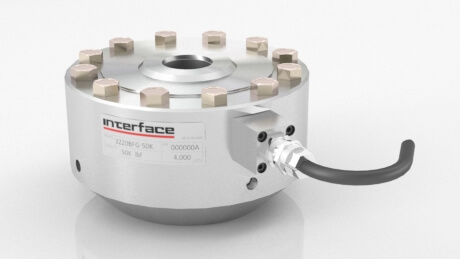
3200 Precision Stainless Steel Load Cell
The 3200 has all the features of the Interface Model 1200 Low Profile only is stainless steel and hermetically sealed for harsh applications. Capacities from 2.5K lbf to 100K lbf are...
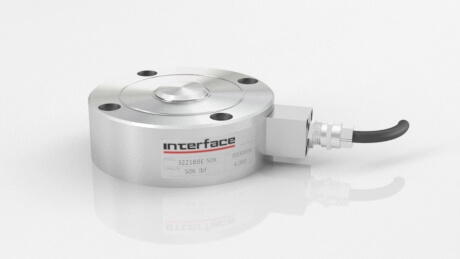
3201 Precision Stainless Steel Compression-Only Load Cell
The 3201 Compression-Only load cell has all the features of the Interface Model 1201 LowProfile™ and in addition it is stainless steel and hermetically sealed for harsh applications. Capacities from 2.5K lbf to 100K lbf are...
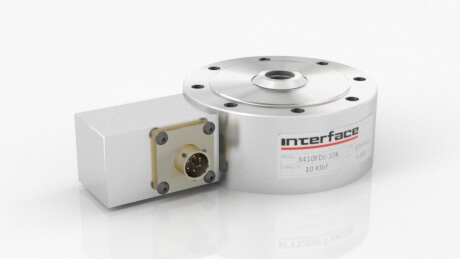
3410 Intrinsically Safe Low Profile Load Cell
The 3400 Series are a specially designed versions of Interface load cells with loop-powered intrinsically safe amplified output for use in oil field and other hazardous locations. These load cells are derived from other proven Interface models by...
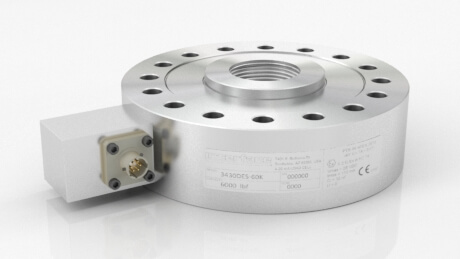
3416 & 3430 Coil Tubing Load Cells
These are designed for measuring tension and compression on coil tubing in the oil industry. Capacities from 20K lbf to 60K lbf are...
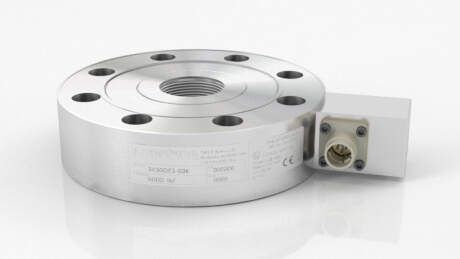
3420 Coil Tubing Load Cell
The 3420 load cell is designed for measuring tension and compression on coil tubing in the oil industry. Capacities from 40K lbf to 50K lbf are...
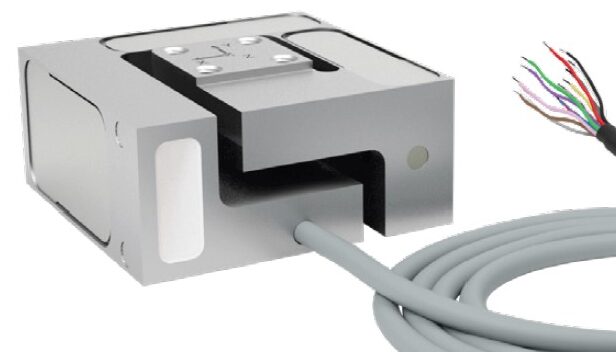
3A40 3-Axis Load Cell
Model 3A40 has 3 independent axes in a small package size. Capacities available are 2N, 10N, 20N, and 50N. Product is made from aluminum alloy so it is very light...
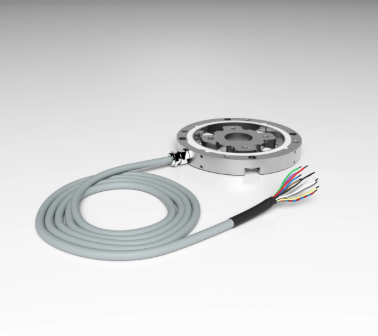
3AFM Series 3-Axis Force/Torque Load Cells
The 3AFM Series 3-Axis Force/Torque Load Cells are ideal for inspection tasks in quality assurance and material testing due to their compact and low-profile design, with a thickness of just 12–14...
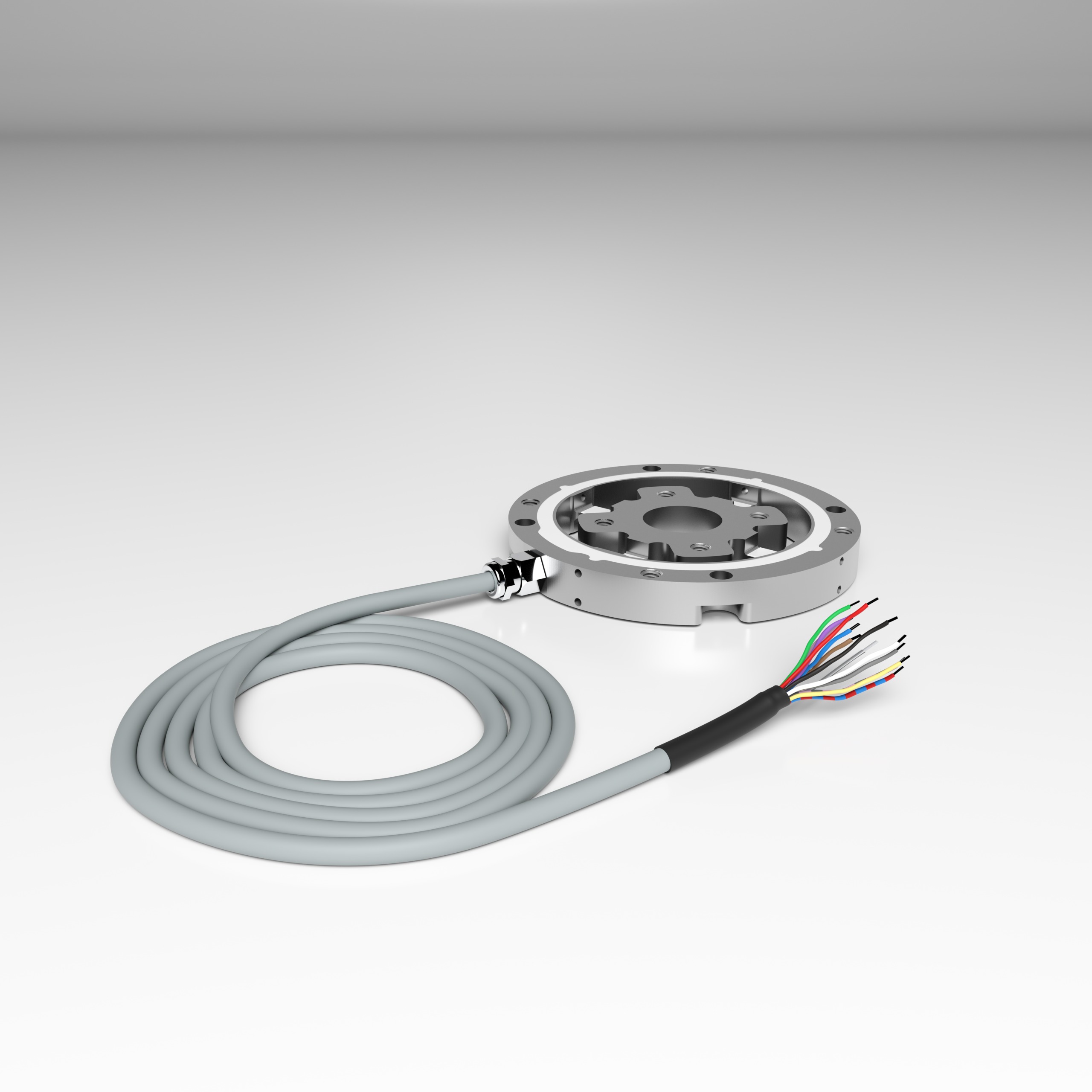
3AFM Series 3-Axis Force/Torque Load Cells
The 3AFM Series 3-Axis Force/Torque Load Cells are ideal for inspection tasks in quality assurance and material testing due to their compact and low-profile design, with a thickness of just 12–14...
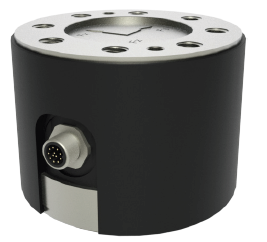
3AR Series Round 3-Axis Load Cells
The 3A Series 3-Axis Load Cell is ideally suited to many industrial and scientific applications, such as aerospace, robotics, automotive and medical research (orthopedics and bio-mechanical). The load cell is provided in various capacity ranges and...
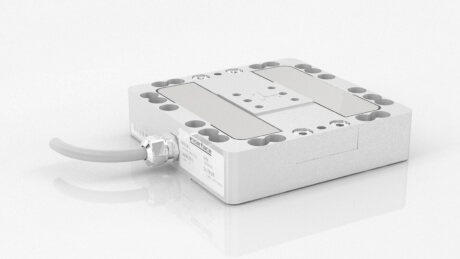
3AXX 3-Axis Load Cell
Our 3AXX- 3-axis force load cell measures forces simultaneously in 3 mutually perpendicular axes: X, Y, and Z – tension and compression. Each axis provides a full bridge output and requires no mathematical manipulation. The 3-axis load cell is...
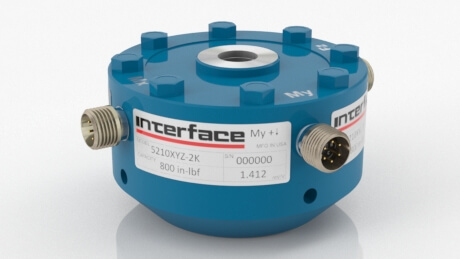
5200XYZ 3-Axis Force Moment Load Cell
The 5200 Low Profile load cell is designed for applications where it is required to measure moment loads as well as axial load to determine center of gravity or misalignment. Available in capacities from 1K lbf. to 50K...
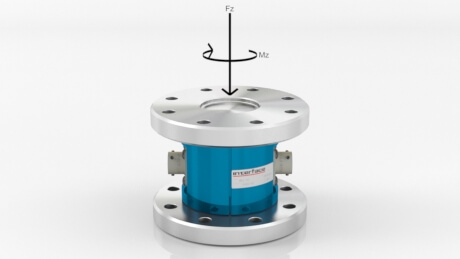
5600 Axial Torsion Load Cell
Model 5600 series Axial Torsion transducer measures both Torque and Force in one package. Designed for low cross-talk and high resistance to extraneous loads. Capacities from 6K lbf / 5K lb-in to 180K lbf / 300K...
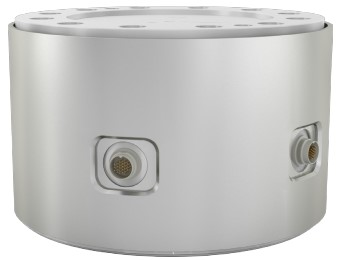
6A225 6A300 6-Axis High Capacity Force Torque Load Cell
Interface’s 6-axis high capacity load cell measures forces simultaneously in three mutually perpendicular axes and three simultaneous torques about those same axes. 12 full bridges provide mV/V output on 12 independent...
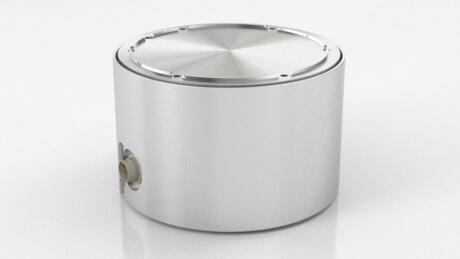
6AXX 6-Axis Force Torque Load Cell
Interface’s 6-Axis load cell measures forces simultaneously in 3 mutually perpendicular axes and 3 simultaneous torques about those same axis. Six full bridges provide mV/V output on 6 independent...
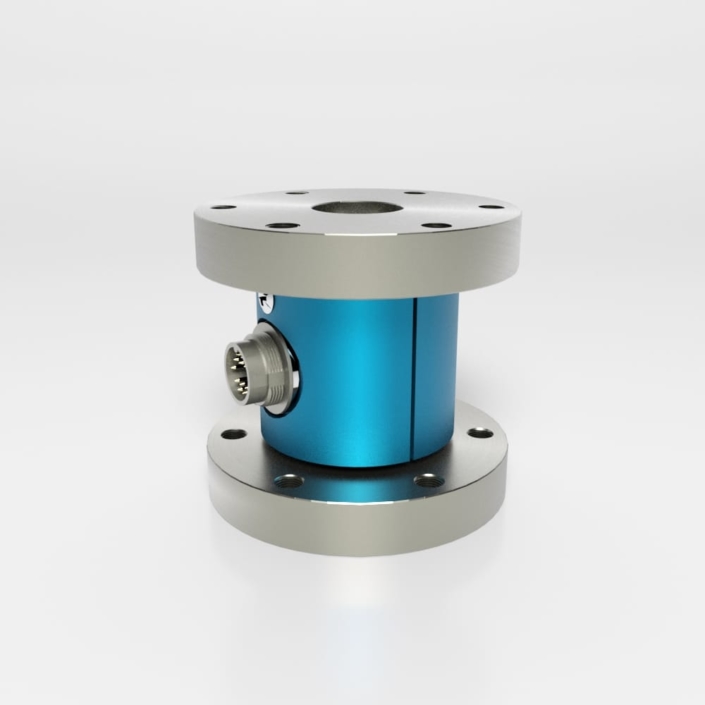
AT101 – Axial Torsion Force and Torque Transducer
Model AT101 is an axial torsion transducer for measuring both torque and force in a single sensor. Typical applications include bearing test and material test...
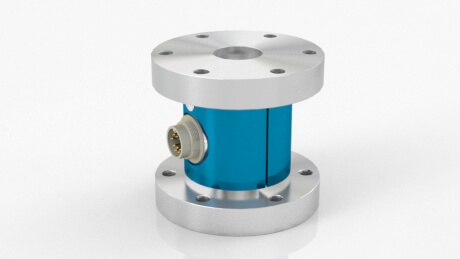
AT101 Axial Torsion Load Cell
Model AT101 is an axial torsion transducer for measuring both torque and force in a single sensor. Capacities from 0.5 kN to 20 kN Force and from 5 Nm to 50 Nm...

AT102 Axial Torsion Load Cell
Model AT102 is an axial torsion transducer for measuring both torque and force in a single sensor. Capacity 10 kN Force and 10 Nm...

AT103 Axial Torsion Load Cell
Model AT103 is an axial torsion transducer for measuring both torque and force in a single sensor. Capacities: 10kN/10Nm &...
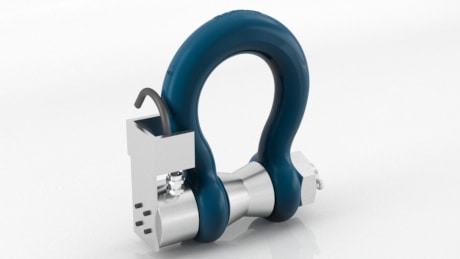
ATEX Bow Type Crosby™ Cabled Load Shackle
The ATEX/IECEx load shackles are designed for lifting and weighing in rugged or harsh environments, and are rated for operation in Zone 1 and 2 hazardous areas. The basic shackle uses the Crosby G2130 (1 to 25MT or 2.2K to 55.1K lbf) and G2140 (40...
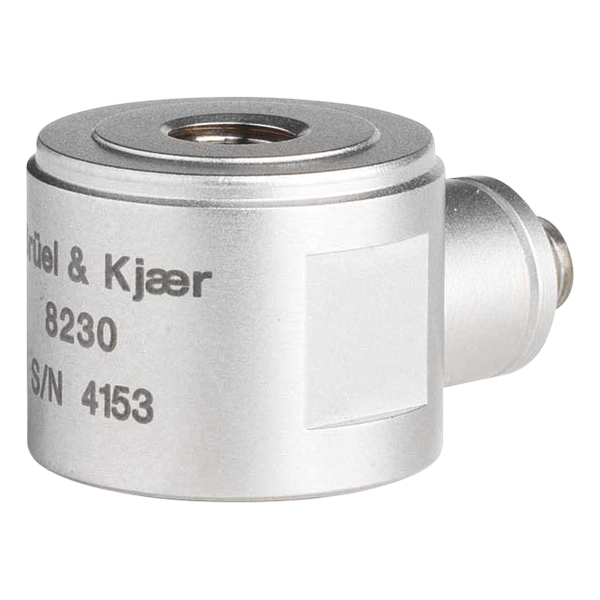
B&K Type 8230 DeltaTron CCLD Force Transducer
Designed for dynamic, short-duration static and impact force...
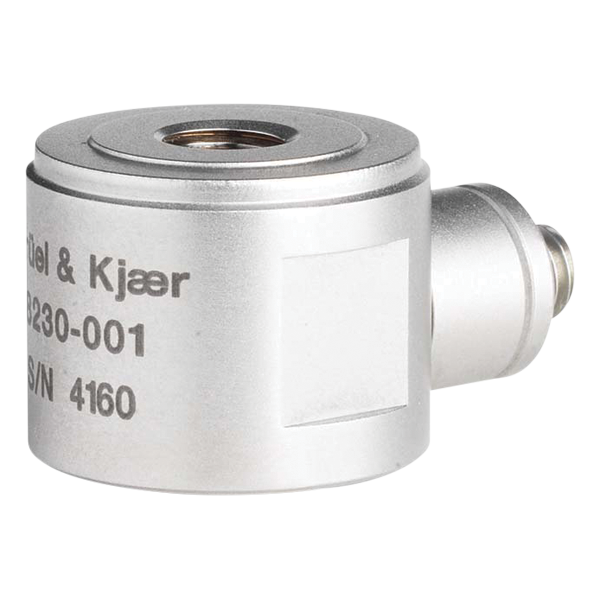
B&K Type 8230-001 DeltaTron Force Transducer
Designed for dynamic, short-duration static and impact force...
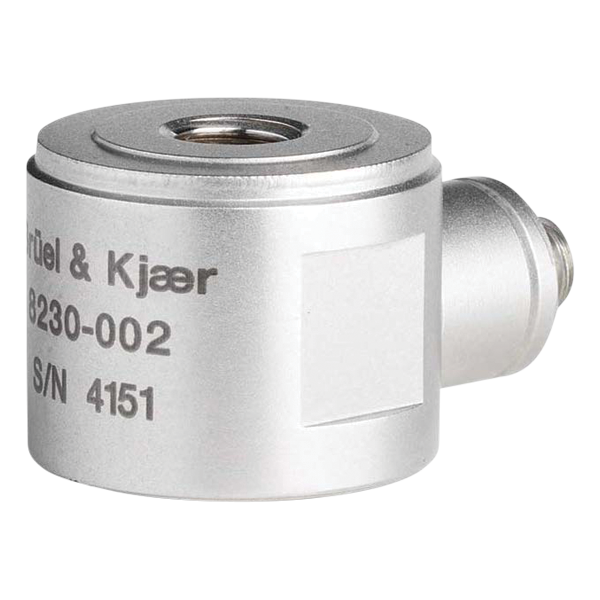
B&K Type 8230-002 DeltaTron Force Transducer
Designed for dynamic, short-duration static and impact force...
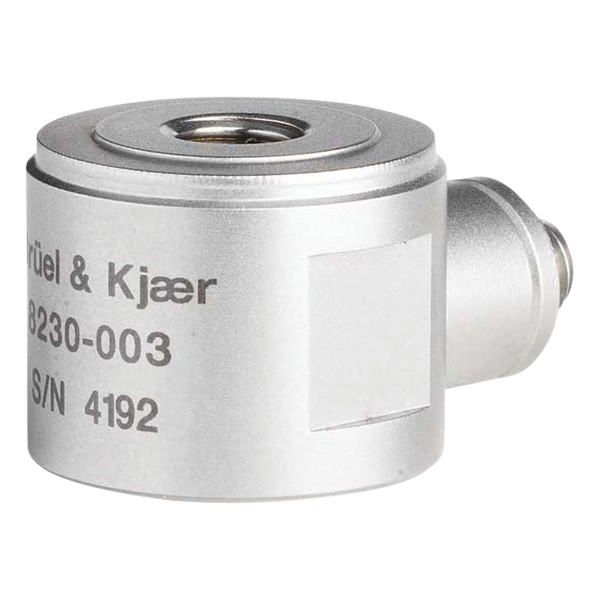
B&K Type 8230-003 DeltaTron Force Transducer
Designed for dynamic, short-duration static and impact force...
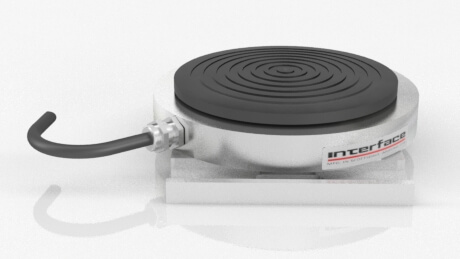
BPL Brake Pedal Load Cell
Model BPL is a very low profile load cell for measuring force on brake pedals. Capacities from 50 lbf to 500 lbf are...

C2 Compression Force Transducer
The C2 load cell is the industry standard when it comes to compressive force measurement: reliable, robust and durable. The C2 is manufactured from stainless steel and provides IP67 / IP68 sealing solutions. Loading is applied to the integral...
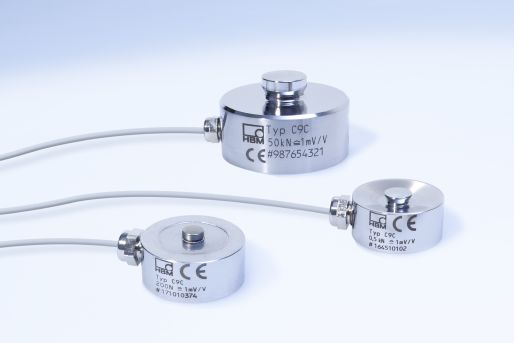
C9C Compression Force Transducer
It fits into any space: The C9C miniature force sensor is ideal for measuring compressive force where space is a constraint and, at the same time, it is very...
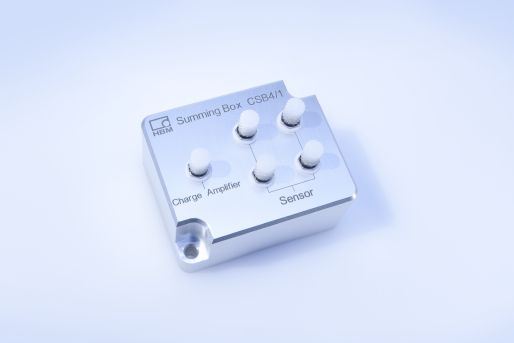
CSB4/1 Summing Box
Summing box for parallel connection of up to four piezoelectric sensors to one charge amplifier...
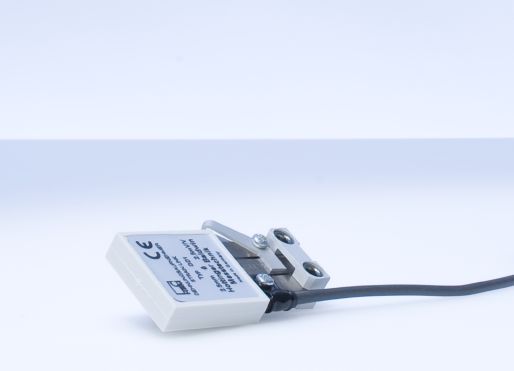
DD1 Displacement and Strain Transducer
The strain gauge based DD1 displacement transducer measures displacements of ±2.5 mm very accurately. The DD1 can also be used as a strain transducer due to its accessories. Moreover, the sensor has become the standard in materials...
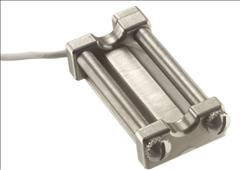
EL20-S458 Belt Tension Load Cell
Measurement Specialties has applied our decade of experience serving the automotive crash test industry to design the ultimate crash test seat belt restraint sensor. The EL20-S458 provides a super low mass titanium structure to minimize F=MA errors...
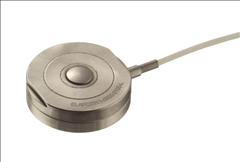
ELAF Compression Load Cell
The ELAF Series compression load cells raise the bar for high performance at low cost. Measurement Specialties proprietary Microfused™ technology, derived from demanding aerospace applications, employs micro-machined piezoresistive strain gages...
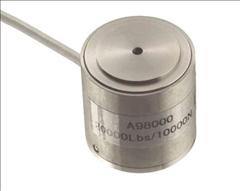
ELHM Load Cell
The ELHM load cell is a compact package able to fit into many applications where others cannot. The low noise Wheatstone bridge consists of metal foil strain gauges which provide typically 2 mV/V of full scale output. When compact design and...
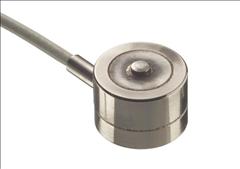
ELHS Load Cell
The ELHS load cell is a compact package able to fit into many applications where others cannot. The low noise Wheatstone bridge consists of piezoresistive strain gages which provide 200 mV of typical full scale output. When compact design, extreme...
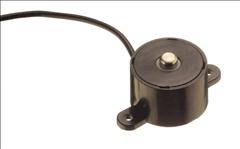
FC22 Compression Load Cell
The FC22 Series low cost compression load cells create new markets previously unrealizable due to cost and performance constraints. This series provides a new level of performance at very low cost. Measurement Specialties' proprietary Microfused™...
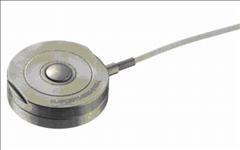
FC23 Compression Load Cell
The FC23 Series low cost compression force sensors create new markets previously unrealizable due to cost and performance constraints. This series raises the bar in price and performance. Measurement Specialties’ proprietary Microfused™...
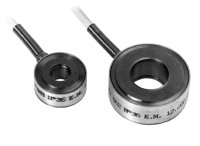
FMT Force Sensor
Measurement-Specialties’ washer load cell, model FMT, is designed to measure clamping and screwing forces. It is available in standard ranges from 0-4 klbf to 0-64 klbf.The sensor design reduces the hysteresis and sensitivity variations associated...
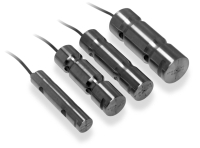
FN1010 Force Sensor
Measurement-Specialties’ load pins, model FN1010, are designed to fit in the place of the regular mounting unit. The implantation is facilitated by the possibility of modifying a certain number of dimensions. The FN1010 is suitable for numerous...
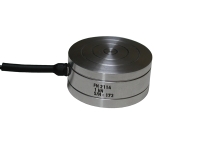
FN2114 Force Sensor
The FN2114 load cell has been developed for pedal load testing. Its size allows the sensor to be easily installed on the pedals of any vehicle or a fatigue/endurance test bench. Since the forces to be investigated on the brake, clutch or...
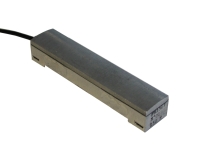
FN2317 Force Sensor
The FN2317 is designed with the express purpose of allowing quick and easy installation when measuring forces applied to the handle of the hand brake in automobiles. Through careful placement of metallic strain gauges inside the sensors, accurate...
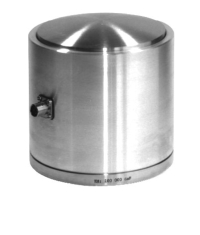
FN2420 Force Sensor
The FN2420 is a high accuracy compression load cell often used in applications involving calibration presses. It is available in standard ranges from 0-4000 to 0-1000000 lbf and comes with many options, including a concave loading fixture and an...
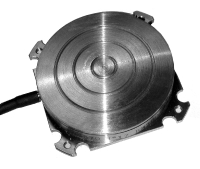
FN2570 Force Sensor
The FN2570 load cell has been developed for pedal force testing. It attaches easily on all types of pedals and test rigs for endurance and fatigue tests, especially where size is an important factor. Strain is measured with high precision...
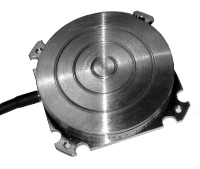
FN2640 Force Sensor
The FN2640 is specially designed for overseeing manufacturing processes. It measures with high consistency the regularity of compression load generated when fitting pieces. With its compact design and robust construction, the sensor easily...
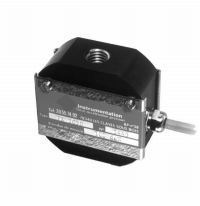
FN3030 Force Sensor
The FN3030 measures tension and compression in standard ranges from 0 - 50N to 0 - 100 kN. The FN3030 is well suited for customization in industrial applications and protection levels can be upgraded for use in hostile environments. Additionally,...

FN3060 Force Sensor
The FN3060 S-beam load cell is highly suited for use in test benches and fatigue tests. Due to the mechanical design, the FN3060 is especially durable. It measures tension and compression in standard ranges from 0-50 to 0-500lbf. For high-level...
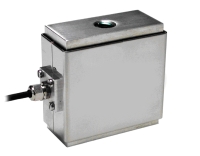
FN3148 Force Sensor
The FN3148 high precision load cell features accuracy of 0.05% F.S. It is available in standard ranges from 0-10 N to 0-2000 N . Integrated mechanical stops protect against accidental overloads in tension and compression. For high-level output a...
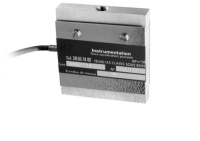
FN3280 Force Sensor
The FN3280 S-beam load cell is designed to measure low loads and comes in standard ranges of 0-0.2 lbf to 0-1 lbf. Integrated mechanical stops protect against accidental overloads up to 100 times F.S. The FN3280 provides a combination of economy and...
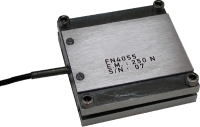
FN4055 Force Sensor
Measurement Specialties has applied our decade of experience serving the automotive crash test industry to design the ultimate crash test seat belt restraint sensor. Created for the automobile industry, the FN 4055 measures with excellent accuracy...
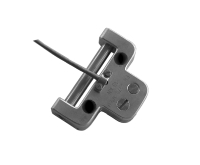
FN4070 Force Sensor
The FN4070 load cell measures the effort generated on the anchor point of seat-belts during crash-tests. It has been specifically designed with a replaceable tongue, so that the load cell can be re-used by simply changing the tongue. It also has a...
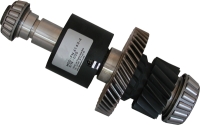
FN6163-2 Force Sensor
The FN6163-2 transducer is part of a whole measurement system, which allows verifying the correct pre-straining of the shafts and differentials in a gearbox. Made to the design of the original short secondary shaft, it accurately measures the axial...
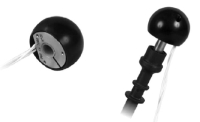
FN7080 Force Sensor
The FN7080 is installed in place of the original gear knob on the gear stick of a vehicle and will measure the force required to change gear. Force is measured either in two or three directions. An adapter coupled with an interface collar allows a...
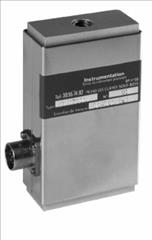
FN7110 Force Sensor
The FN7110 features high accuracy measurement channels in two ranges in the same load cell. The standard ratio between the ranges is 1 to 10, and standard load range combinations go from 0-2 and 0-20 lb through 0-200 and 0-2000 lb. The FN7110's...
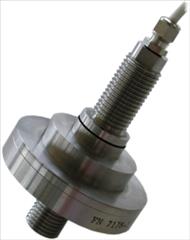
FN7178-2 Force Sensor
The FN7178-2 is designed specifically to be mounted in series with a front wheel shock absorber on a vehicle. It measures the force in three directions to study ride characteristics under a wide range of driving conditions. Mono-directional versions...
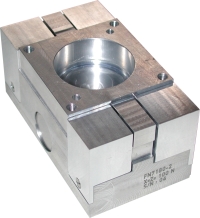
FN7180-3 Force Sensor
The FN7180-3 is designed specifically to measure friction between two elements. Used mainly for automotive application, the sensor controls the efficiency of windshield soaps, elastomeric surfaces, oils and fluids under several conditions. The...
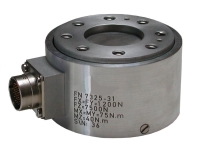
FN7325 Force Sensor
The multiaxial FN7325 measures force from 0-5 kN to 0-250 kN along three axes as well as the corresponding torque from 0-200 N.m to 0-7000 N.m. The FN7325 is simple to use and install and in many diverse applications circumvents the necessity of...
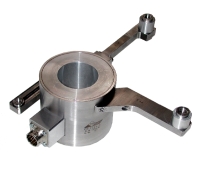
FN7384 Force Sensor
The multi-axial FN7384 is designed for force measurement for tool calibration. Designed for an automotive application, the complete sensor replaces with corresponding dimensions and tolerances, the piece the machine will produce. On strategic places...
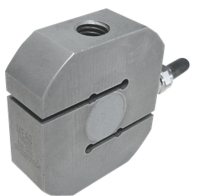
FN9620 Force Sensor
The Model FN9620 is a S-Beam load cell with ranges from 500N to 10kN, designed to operate in hostile environments from -40 to 90°C with IP68 ingress protection. It provides high stiffness for high cycle use, low off-axis load sensitivity and high...
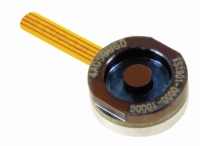
FS19 Force Load Cell
The FS19 load cell, with ranges from 500G to 3000G, uses proven Microfused sensor technology derived from demanding aerospace and automotive applications which employs micro-machined piezoresistive strain gages fused with high temperature glass to a...
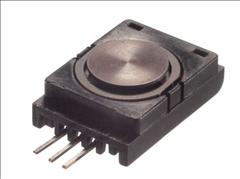
FS20 Compression Load Cell
The FS20 Series low cost compression force sensor creates new markets previously unrealizable due to cost and performance constraints. This series raises the bar in price and performance. Measurement Specialties’ proprietary Microfused™...
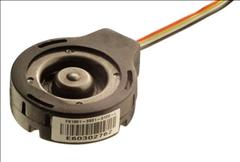
FX1901 Compression Load Cell
The FX1901 series establishes a breakthrough price/performance value for compression load cells. The FX1901 is a 1% load cell with full scale ranges of 10, 25, 50 or 100 lbf compression. This new, low-cost technology will enable force sensing in a...
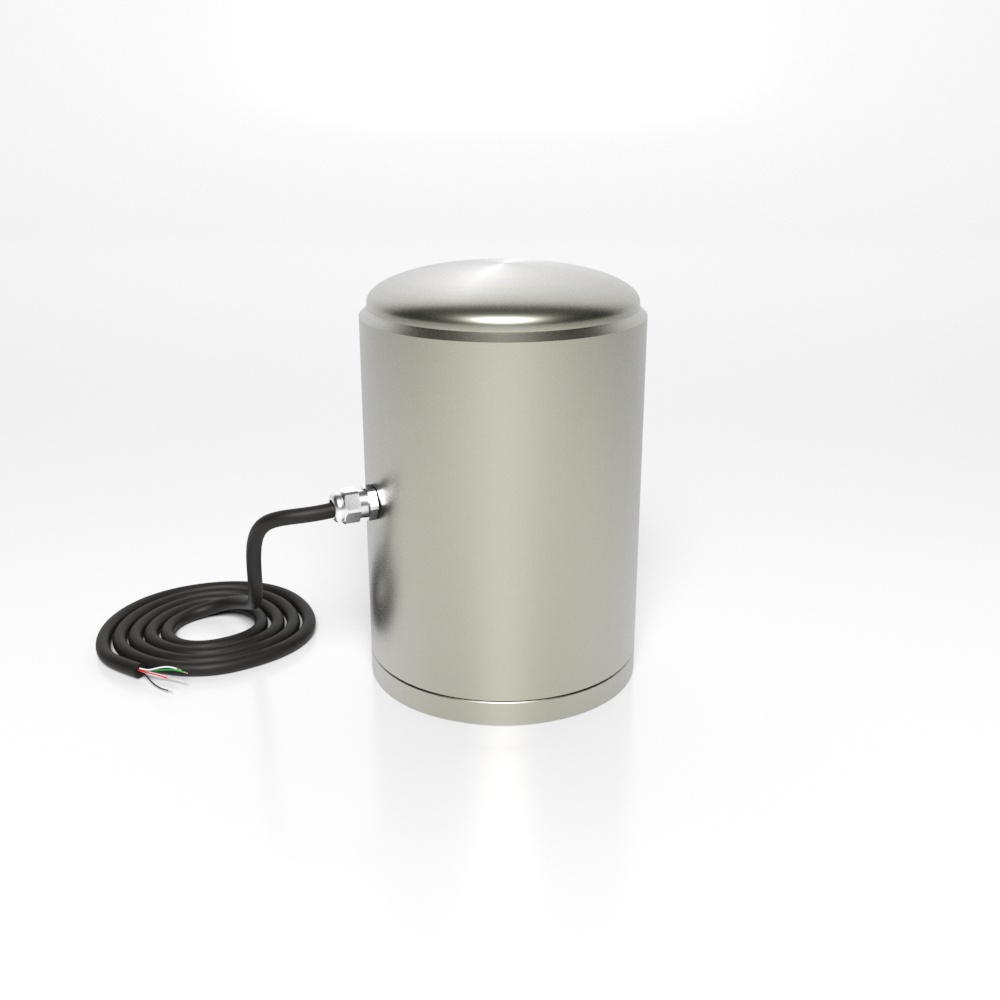
ICPA Stainless Steel Compression Only Load Cell
ICPA is a stainless steel compression-only load cell typically used in higher force applications. Available in capacities from 2MT to...
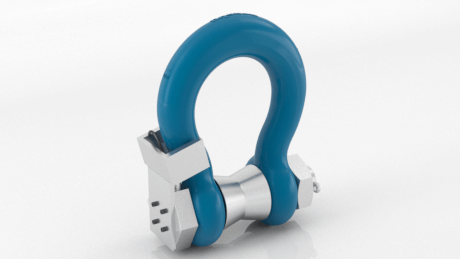
ISHK-B Bow Type Crosby™ Cabled Load Shackle
The ISHK-B load shackles are designed for lifting and weighing in rugged or harsh environments, including submersible applications. The basic shackle uses the Crosby G2130 (1 to 25 MT / 2.2K to 55.1K lbf), G2140 (40 to 120 MT / 88.2K to 265K lbf)...
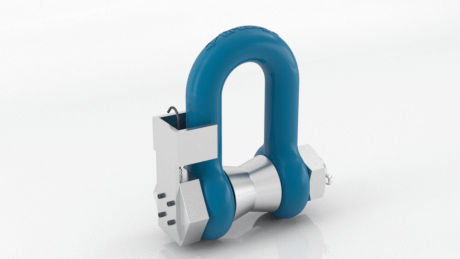
ISHK-D ‘D’ Type Crosby™ Cabled Load Shackle
ISHK-D ‘D’ Type Crosby™ Cabled Load Shackle is designed for lifting and weighing in rugged or harsh environments. The basic shackle uses the Crosby G2150 series and are available in a range from 1 MT to 35 MT (2.2K to 77.2K...
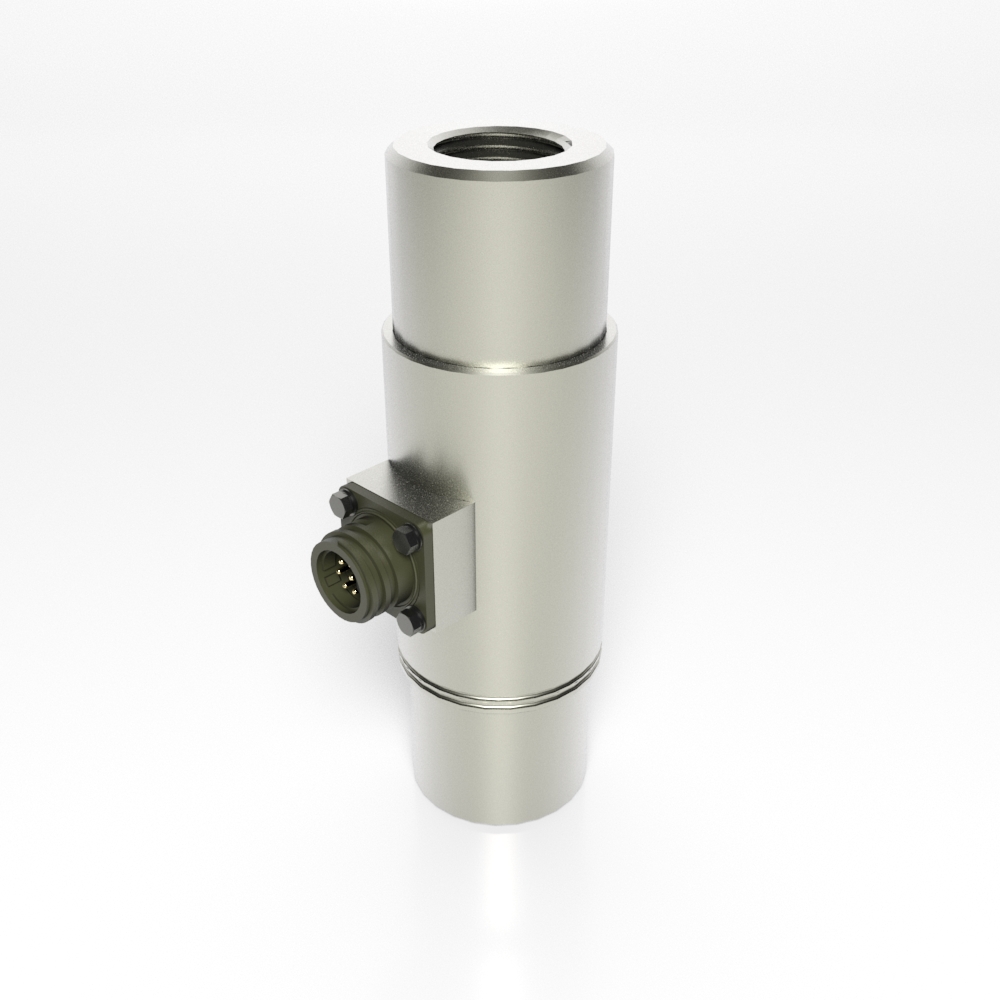
ITCA Stainless Steel Tension and Compression Load Cell
The ITCA series load cell is ideal for measuring both tensile and compressive forces. Available in capacities from 1MT to...
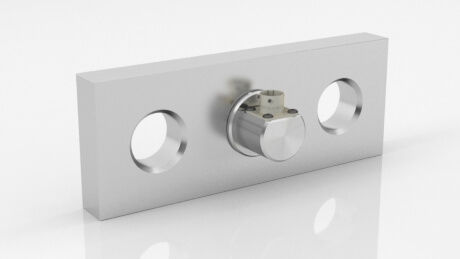
ITL Tension Link Load Cell
Model ITL is great for lifting applications where short or long distances are involved. This product can be amplified with 5VDC, 10VDC or 4-20mA output and is available in capacities from 11K lbf to 220K lbf (5 to 100 metric...
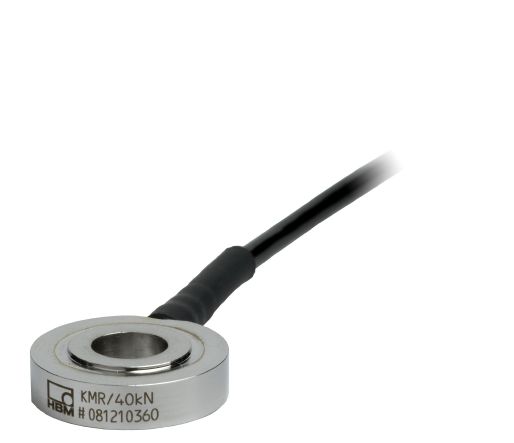
KMR Compression Force Washer
The KMR force washer is suitable for static or dynamic compressive forces. The sensor is manufactured from stainless steel and sealed to IP67 rating for outdoor use. The sensor dimensions are per DIN125. Typical applications include production...
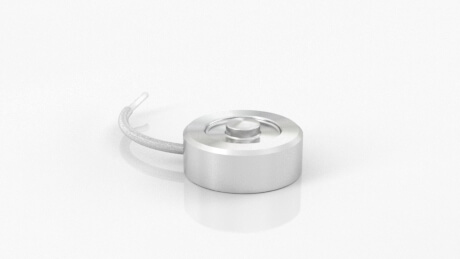
LBM Compression Load Button
Model LBM Compression Load Button is constructed from stainless steel and has a small size. This product is available capacities range from 25 lbf up to 50K...
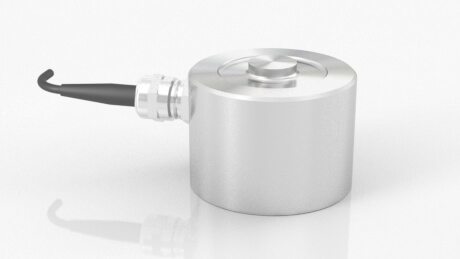
LBMP Overload Protected Compression Load Button
Model LBMP is stainless steel overload protected compression load button. This product is available in capacities ranging from 0.01kN to 100kN (2.25 lbf to 22.5K...
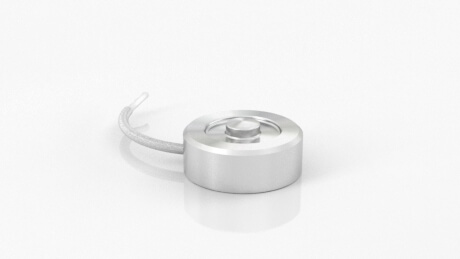
LBMU Ultra Precision Compression Load Button
Model LBMU Ultra Compression Load Cell has a nonlinearity specification of +/-0.15%FS. It is constructed from stainless steel and is available in capacities from 100 lbf to 1K lbf (0.45kN to...
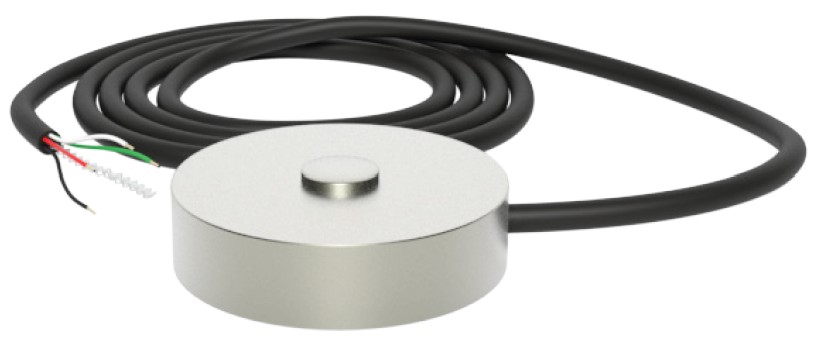
LBS Miniature Compression Load Button
Model LBS Miniature Compression Load Button is constructed from stainless steel and has a small size. This product is available capacities range from 5 lbf up to 1K lbf (22.2 N to 4.45...

LBSU – ConvexBT – Load Button Load Cell
The LBSU ConvexBT Load Button Load Cell is superior to any other load button. Constructed from heat treated stainless steal and environmentally sealed with integral temperature...
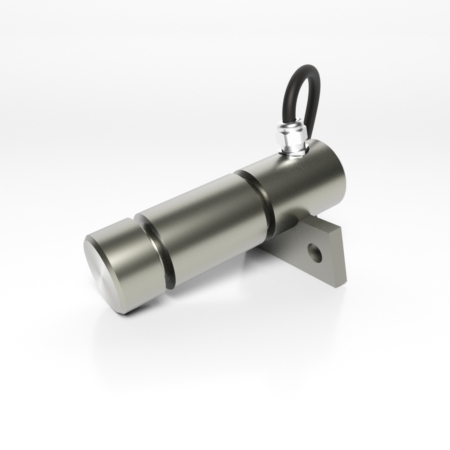
LP Stainless Steel Load Pin
Model LP Stainless Steel Load Pin is great for lifting applications where short or long distances are involved. This product can be amplified with 5VDC, 10VDC or 4-20mA...